Badass Thor: Ragnarok Chinese Trailer Has Doctor Strange, Hela Battles And Lots More

We're just over a month away from the release of Thor: Ragnarok. The next entry in the Marvel Cinematic Universe has promised more humor than previous entries in this particular series, but a new trailer shows it won't be lacking in action.

Blade Runner 2049 Review

Blade Runner 2049 returns to Philip K. Dick's deep philosophical questions about the nature of humanity, and expressed through a captivating, epic mystery it amounts to a breathtaking, mind-bending cinematic experience.

The Mountain Between Us (2017)

After an incoming storm forces the cancellation of her flight to New York, talented photojournalist Alex Martin finds herself stuck in Idaho the night before her wedding.

This is default featured slide 4 title

Go to Blogger edit html and find these sentences.Now replace these sentences with your own descriptions.This theme is Bloggerized by Lasantha Bandara - Premiumbloggertemplates.com.

Why Agents Of S.H.I.E.L.D. Season 5 Almost Didn’t Happen

Agents of S.H.I.E.L.D. was Marvel's first major live-action television show, coming years before the Netflix leg of the Marvel universe kicked off. The four seasons so far have been a hit with diehard fans, and Season 4 changed things up in some exciting ways.

Showing posts with label Reviews. Show all posts

Kingsman: The Golden Circle Review

Sequels are a difficult business, and everybody knows it. They're even harder to execute when your first time out was such a surprise success, much like director Matthew Vaughn's Kingsman: The Secret Service was back in 2015. So here we are, with a new outing of a franchise that loves to wink and nod towards the cheekier side of James Bond's legacy, waiting for folks to determine whether this is a franchise worth building on, or something that needs to end rather quickly. Thankfully, I can say that Kingsman: The Golden Circle keeps the action cranked, the laughs fresh, and even injects more confidence into its proceedings, making for what Eggsy (Taron Egerton) himself might call a fucking proper blast.

One year after the events of Kingsman: The Secret Service, Eggsy (Taren Egerton) and Merlin (Mark Strong) are thrown into the deep end, as someone has eliminated the rest of their fellow Kingsman agents. Following the Doomsday protocol, they hook up with the Statesman agency -- American counterparts who fancy a good whiskey and Southern hospitality. Together, they'll embark on a mission to stop a crazed drug lord (Julianne Moore) with some nasty plans to make herself known to the world.


There's a fair bit of repetition in Kingsman: The Golden Circle, as moments and scenarios from the first film are brought up, and sometimes relived with a slight variance in tow. For the most part, this doesn't kill the film's vibe, however it does give a bit of an air of "been there, done that" to some of the film's elements. That said, the humor of Jane Goldman and Matthew Vaughn's adaptation of Mark Millar's Secret Service comic is still very much intact. Even if we've seen some of this before, it's nice to be with characters that we grew to love in the original film.

It's even nicer to see that, especially in the case of Eggsy, the characters from Kingsman: The Secret Service have developed into even stronger identities this time around. Even Mark Strong's Merlin gets to have some fun, as his first field mission puts him right alongside Eggsy, and you can tell that Strong and his character are having a blast. But, of course, Kingsman: The Golden Circle isn't totally about revisiting old friends, as some new characters have entered the ring, as well.


The Statesman organization's presence gives us some fun performances from Channing Tatum, Jeff Bridges, and Halle Berry; though if there were an MVP for the American side of the action, it'd have to be Pedro Pascal. From the accent right down to the swagger in battle, Pascal's Whiskey (yes, with an 'e') is a rootin' tootin' ass kicker, and he makes it work as the one American agent with the most screen time. Though, to be fair, Tatum, Bridges, and Berry do so well in their bit parts, you kind of want a separate Statesman film to exist, just so they can have more fun on their own.

Of course, this isn't to say that Kingsman: The Golden Circle is a perfect film, as the one major hiccup comes from Julianne Moore's villain, Poppy. It's not that she's a bad antagonist. It's just that she seems a little more hands off than Samuel L. Jackson's Valentine was in Kingsman: The Secret Service. And while her villainy is operating in the background, pushing the plot forward, it would have been nice to see her get a little more action overall. Still, her sweetly evil demeanor is something to be admired, making her moments in the film a lot of fun to watch.


Ultimately, that's what Kingsman: The Golden Circle can be boiled down to: fun. Pure, unadulterated, high-octane fun that retains the laughs of Kingsman: The Secret Service, while amping up the action. The movie starts with a fight / chase scene that lights a fire under this film's ass, and keeps it running all throughout. By time the third act of brawling fun arrives, Vaughn's film has given us characters that are built to last, and action set-pieces that know how to throw punches, as well as carry a fantastic tune. Summer might be over, but Kingsman: The Golden Circle is the type of big-ticket blockbuster we could have used a couple months ago. It's easily one of the most enjoyable sequels / action pictures of the year.


Read more >>  Battle Of The Sexes Review

Battle Of The Sexes Review

Given the film's synopsis, I expected Jonathan Dayton and Valerie Faris' sports biopic Battle of the Sexes to be about tennis. Specifically, I anticipated it being about the highly-publicized 1973 exhibition match between female tennis sensation Billie Jean King (Emma Stone) and former tennis champ Bobby Riggs (Steve Carell).


It's not. I mean, Battle of the Sexes does gradually build to the staging of this groundbreaking competition, an event that still to this day holds the distinction of being the largest audience to watch a tennis match in the United States (an estimated 90 million viewed the match worldwide, with 30,472 in the Houston Astrodome to witness it live). But tennis is a virtual afterthought in this movie -- there's a shocking lack of actual tennis being played on screen -- while Dayton and Faris focus, instead, on the melodramatic personal developments in the lives of the two lead characters at their disposal. Battle of the Sexes wants us to understand King and Riggs off the court, as people. The match they finally play against each other is essentially inconsequential to the point of this story.


And in the larger context, Battles of the Sexes is the story of Billie Jean King, who was facing numerous "conflicts" off the court that are, tangentially, tied to her status as the world's top female tennis player at the time. The movie begins with the 29-year-old King (Stone) wining three Grand Slam singles titles, proving her dominance over her chosen sport. However, King and her fellow female pro players remain at odds with Jack Kramer (Bill Pullman) and the chauvinistic execs in the world tennis association, who favor male players and refuse to offer women equal prize money. Backed by some of the country's top female players, Billie Jean branches out and forms her own competition circuit, making both hay and headlines as they take their show on the road.


It's on the road that King meets, and gradually falls for, Marilyn Barnett (Andrea Riseborough), a California hairstylist who drops everything and begins following Billie Jean as she travels from tournament to tournament. The problem? Billie Jean King was married at the time to Larry King (Austin Stowell), so in addition to fighting for equality on the pro circuit and wrestling with her romantic entanglements in the roadside motels of the new ladies' tennis circuit, King was also watching her game slip because her focus on actual tennis was wavering.

There's more than enough rich material in this fertile chapter of Billie Jean King's personal and professional biography to sustain a feature film (read up on the repercussions of King's outing as a lesbian after you leave Battle), but this also means that Bobby Riggs (Steve Carell) gets short-changed by Battle of the Sexes... despite the fact that his side of the story is equally compelling. A gambling addict, Riggs appeared to miss the limelight that used to come with his tennis success. When a cronie plants the spark of a marketing idea in Bobby's head that he'd make a fortune by returning to the courts to play the world's top female tennis athlete, Riggs can't let it go. He embraces the sideshow that becomes the pursuit to stage the Battle of the Sexes. But he also juggles a deteriorating marriage to Priscilla Wheelan (Elisabeth Shue), for reasons that are hardly touched on in this film.


Battle of the Sexes might have been better if it focused intently on one or two of these important issues. By tackling all of them, it shoulders too large of a load, and appears to give the Cliff's Notes version of some significant chapters in Billie Jean King's history. Stone and Carell are good in their roles, though they don't share the screen until the picture's end, so it's as if they're operating in two disconnected stories that marry almost accidentally. And the film takes a safe, soft approach to complicated topics of sexism in the pro-sports arena, the sacrifices one takes to be the best in any chosen profession, and the repercussions of trying to live life in the afterglow of global success.

While not quite toothless, Battle of the Sexes is, at best, a light volley of banter and debate over important topics, rather than a hard-hitting expose with contemporary ties to ongoing gender discussions (which it easily could have been). It does an admirable job of explaining how and why then "battle" between Billie Jean King and Bobby Riggs was bigger than the actual match. But in the end, it'll be remembered as being a movie about several important topics, rather than being an important movie in and of itself.

Read more >> Gerald’s Game Review & Trailer

Gerald’s Game Review & Trailer

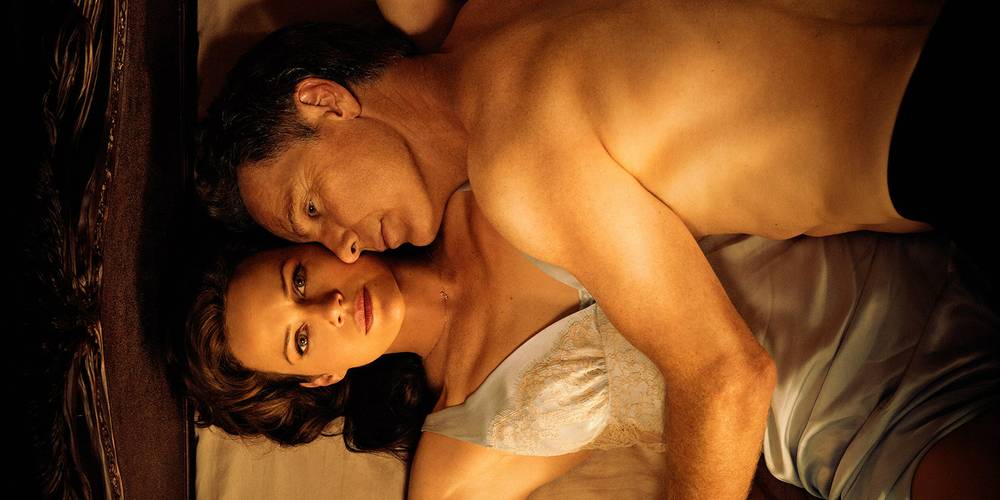
It's been said before, and it'll be said again: 2017 has been the year for Stephen King adaptations. And with Netflix's release of Gerald's Game, the famous author's work has yet again been plucked from the page, and given new life on the screen. While the novel seems to have a reputation as one of King's lesser works, the film is the polar opposite, as it is a claustrophobic head trip that is set to dazzle the audiences who are about to enjoy its contents.


Jessie (Carla Gugino) and Gerald Burlingame (Bruce Greenwood) head off to a secluded getaway for a weekend of marital rehab. With Gerald looking to spice things up with a little bit of kink, the couple gets off to a bad start when Jessie confronts him about his obsession with dominating her. Things only get worse when her husband dies due to a heart attack, just after he has handcuffed her to the bed. With no easy means of escape, and no one but herself in the room, Jessie's about to go through quite the interesting weekend.


So far this year, there have been two levels of Stephen King adaptation: either it's a Dark Tower level experiment, or an IT style success. Gerald's Game lands on the better side of the spectrum, as co-writer / director Mike Flanagan takes what could have been a solid hour of anthology TV and turns it into an engrossing feature film. The tension of Jessie's confinement, as well as the mental gymnastics she goes through due to her predicament, are all pitch perfect, with Carla Gugino carrying a substantial portion of the film.


Both Gugino and Bruce Greenwood turn in nuanced portrayals of a married couple on the proverbial rocks, and in the section of the film that opens on that story, they really do a good job of convincing the audience that they'd be perfectly ok if the film just focused on that story. Of course, this being a Stephen King story, things get deadly, and they get weird, with the stranger side of the spectrum allowing our duo to play different facets of their characters' psyches. While the bulk of the film is focused on Jessie's story, Greenwood's Gerald makes himself very much present throughout the narrative of Gerald's Game, without being intrusive or extreme. His character is ambiguous, being left for the audience to determine the level of his true villainy, and it shows through every piece of the finished product.

The best part about Gerald's Game, besides the presence of a powerful script with two equally luminary participants shining in its light, is the cinematography. Michael Fimognari's framing of the limited locations that the film takes place in is tight, but never restrictive for the sake of being so. Naturally flowing with the story's expanding and contracting viewpoint, it's a pretty fantastic film to watch, as well as to digest from a narrative perspective. Of course, all of this praise helps the one flaw of Gerald's Game's narrative stand out all the more.

While the film manages to bring itself in at a taut 103 minutes, the film could have been a little tighter if it didn't fall into an expository rabbit hole in its epilogue. Surely there are pieces and details that are vital to the story's ultimate catharsis, but considering how well paced the rest of the film before it was, the ending to Gerald's Game steals some of the wind from the movie's overall sails. The fact that a sequence of intense body horror and tension precedes this epilogue serves as a hard barrier between the two tones of the film, and if anything, the moments after the shock and awe of Flanagan's well-crafted film should have been shorter and sweeter.

With the thrill and punch of the better Stephen King films we've experienced, Netflix has now officially entered the Stephen King business with Gerald's Game. If this is any indication of what a continued partnership would bring, both parties should look for as many chances as they can to stay together.

Read more >> Flatliners Review

Flatliners Review

What happens after we die? Is there truly an afterlife with a white light at the end of a long, dark tunnel? These existential questions have plagued humanity for millennia, but perhaps science has finally caught up with our desire to know the truth of existence. A reimagining of the 1990 film directed by Joel Schumacher, Niels Arden Oplev's Flatliners attempts to answer all of our questions about life after death, but while the movie works on a technical and performance level, its cheap scares and contrived plot do little to move the dial forward for the horror genre.

Neither a direct sequel nor a full-blown remake, Flatliners takes the core idea established by the 1990 original and updates it with a new cast of characters for a new generation. Haunted by a (possibly preventable) car crash that took the life of her younger sister nine years earlier, Courtney (Ellen Page) is a talented medical student who spends her evenings secretly studying the mystery of the afterlife. Discovering a possible path to experience the afterlife for brief stretches of time, Courtney enlists the help of fellow students Ray (Diego Luna), Marlo (Nina Dobrev), Sophia (Kiersey Clemons), and Jamie (James Norton) to kill her for one minute and then bring her back. As a result of this bold experiment, the students not only find a path to the afterlife, but they fundamentally rewire their brains to unlock the cognitive potential that they never thought was possible. The downside? They bring something evil back from the other side with them that wants to punish them for their sins.
2017 has seen some great horror movies debut -- whether it is Annabelle: Creation, It, or Get Out. Sadly, we cannot place the Flatliners update among those ranks. Yes, Niels Arden Oplev capably helms the sequel-boot from a purely visual standpoint. That said, while there are a few legitimately creepy sequences (such as one involving a ghostly little girl drawing by candlelight), Flatliners boils down to a series of fake-out jump scares scattered throughout a relatively predictable narrative, and culminates in a rushed climax that simply doesn't pay off the preceding story in an emotionally satisfying way. There's quite a bit of style here, but minimal substance.


As a result, while Flatliners opens quickly and commendably gets to the point almost immediately, the film loses its momentum once the concept of "flatlining" has been fully explained and fleshed out. Because of this, the second act mostly boils down to a series of haunts shared between each of the four main characters that go through with the procedure. Like the steady flow of a pulse on a heartbeat monitor, Flatliners eventually becomes so predictable that you can almost anticipate which of these young doctors will be the next to find themselves visited by a demonic apparition before it even happens.


In a certain sense, it almost feels like Flatliners has one hand unfortunately tied behind its back by its need to stick within the horror genre. This reimagining expands on the premise of the original by positing that flatlining enhances the cognitive function of these stressed out and overworked medical students. It creates an interesting Limitless-esque framework to explore how these characters can become fixated to this dangerous game (drug and addiction motifs play a significant role in the story), but those compelling ideas are sidestepped to focus on the scares. It's a shame, because what could've been a deeper examination of the original's core premise mostly just devolves into a retread that struggles to justify its existence.


The more notable issue that plagues the film's ensemble is the fact that script does not afford the actors much to do in their respective roles. What we need to know about any of the five core doctors is usually summed up by a comment made about them ("Medicine comes easy to you," for example), and we're not given much of a reason to root for them or care about what's happening. Their rationale for taking part in the flatlining procedure is inherently selfish from the get-go, and the added layer of their sins coming back to haunt them ultimately makes it hard even to want to root for most of them to make it out of the film alive.

Despite that issue, if there are two shining lights in Flatliners, they would have to be Diego Luna and Ellen Page. Even when Flatliners' script does not give them much to do, they milk the material for all it is worth and deliver the two best performances in the movie. Page deserves particular credit, as she throws herself into Courtney's obsessed nature and really lets loose when the character realizes what she has unleashed. It just would've been nice to see a more compelling story constructed around the heroine.

Though competently directed and well-acted, Flatliners does little to set itself apart from a run-of-the-mill thriller. True to the material, it simply lacks a pulse. On a superficial level, the film will most likely deliver the requisite scares (albeit cheap jump scares) to enter the Halloween season, but it probably will fail to leave a lasting impression.

Read more >> American Made Review

American Made Review

A huge part of what's sustained Tom Cruise's longevity as a movie star is his immense charisma and likability. He runs real fast and flashes his million-tooth grin, and you're immediately on his side. Even when he's ranging from mischievous to dastardly, there's a part of you who roots for his side. It's a factor that makes Doug Liman's American Made a complex viewing experience, as few titles similarly challenge the audience to simultaneously loathe and love a protagonist like the new movie does with Cruise's Barry Seal.


In reality, Barry Seal was a rather terrible individual (and yes, American Made is based on a true story... or at least based on accounts and reports trying to piece together exactly what happened). As depicted in Gary Spinelli's screenplay, Barry was a thrill-seeking commercial airline pilot and small-time smuggler working for TWA in the late 1970s when he was approached by a member of the Central Intelligence Agency. Introducing himself as 'Schafer' (Domhnall Gleeson), an agent puts an offer on the table to the pilot in a hotel bar: providing him the adventurous life that he seems to seek, Barry would run a front with the brilliantly covert name Independent Aviation Consultants (IAC), and use it as cover to fly missions to Central America and snap secret reconnaissance photos.


Even though the deal requires lying to his wife (Sarah Wright) about how he's spending his days, Barry excitedly accepts the assignment -- but because he is disappointed with government pay and is nothing if not an opportunist, Barry ends up uniting with Jorge Ochoa (Alejandro Edda), Pablo Escobar (Mauricio Mejia) and the MedellĂ­n Cartel to start smuggling cocaine out of Colombia and into the United States. This activity fails to slip past the nose of the U.S. government, but still Barry's status is nonetheless raised, the size of his operation is increased, and he ultimately finds himself heavily involved with the start of the Iran-Contra affair, also known as one of the most controversial political scandals in American history.


While relatively short, clocking in at just under two hours, American Made is very much built to essentially be Doug Liman's Goodfellas -- chronicling the epic rise and fall of a criminal enterprise that generated insane cash flow and good times in addition to serious danger and terrifying violence. It's a natural story for cinema, full of enough extreme ups and downs and stranger-than-fiction events to trip out any audiences unfamiliar with the reality that inspired it, and it opens up Doug Liman to a sense of style not really seen before in his movies -- with lots of bold color and strong cinema verite influences providing an almost documentary-esque feel. It's easy to see the motivation to bringing the tale to the big screen in this sense, even while the storytelling feels hampered by its semi-glorification of its central figure.


American Made marks the second collaboration between Tom Cruise and Doug Liman after Edge of Tomorrow, but while it was great to watch Cruise become the fictional slimy jerk Lt. Col. Bill Cage in that movie, it's questionable if he was the appropriate choice for this feature. Because the film relishes so much in the insanity of its true story and the unfettered criminal activity that was allowed to persist, it never takes any time to look at all the people hurt by what Barry Seal was doing, and as a result doesn't take a judgmental stance on him beyond whether or not he is an interesting character. It doesn't even have a strong authority figure trying vigilantly to bring him down. Add in Cruise's presence and aforementioned charisma, however, and it winds up tilting the scales in the wrong direction -- and the result is that you have a lot of fun watching him in the moment (playing the government for fools, making so much money he can't even hide it on his massive property), but are left with an unfortunate after taste in your mouth while leaving the theater.

The politics inherently tied up in the story make American Made a challenging film to recommend, but supplemented with appropriate extra research about the subject matter, I think it can be. After all, at the end of the day, it has one hell of a story to tell, and tells it in a visually arresting way, and sometimes that's enough for a proper cinematic experience.

Source: cinemablend

Blade Runner 2049 Review

Blade Runner 2049 returns to Philip K. Dick's deep philosophical questions about the nature of humanity, and expressed through a captivating, epic mystery it amounts to a breathtaking, mind-bending cinematic experience.


Ridley Scott's Blade Runner is arguably the biggest and best cult movie ever made. Its original form was famously dismissed by critics and general audiences alike, but subsequent re-edits and the persistent fluorescent and rainy vision of futurist Syd Mead have allowed it to stay relevant in pop culture to the point where it's now viewed as a sci-fi masterpiece. The film took the long road in establishing its legacy -- but director Denis Villeneuve's new sequel, Blade Runner 2049, won't be taking that same path. It won't take 35 years to view it as a sci-fi masterpiece because this time around, people are going to recognize it immediately.


Like its predecessor, the sequel is a genius blend of sci-fi aesthetics blended with a dense and complex noir narrative, this time around written by Blade Runner's Hampton Fancher and Logan's Michael Green. Telling too much of the plot would effectively ruin part of the experience of watching the mystery unfold for the first time, but can be explained in broad strokes. Set 30 years after the first movie, the story follows a new Blade Runner -- a term for a police officer who is assigned to hunt down illegal replicants (synthetic humans designed for slave labor). Sent on what seems like a standard job, K (Ryan Gosling) makes a discovery that could have implications for the entire world.
Assigned an exploratory and termination mission by his superior, Lt. Joshi (Robin Wright), to end the threat before word gets out, K begins an investigation that leads him to uncovering secrets of the past, the actions of a fugitive Blade Runner named Rick Deckard (Harrison Ford), and the nature of his existence. Blade Runner 2049 returns to Phillip K. Dick's deep philosophical questions about the nature of humanity, and expressed through a captivating, epic mystery, it amounts to a breathtaking, mind-bending cinematic experience.


Finding success where so many other long-awaited sequels falter, Blade Runner 2049 strikes a tremendous balance between old and new. K is far from a substitute for Rick Deckard in an identical storyline, and instead is a character with completely different agency, motivations and relationships. By the end you are as invested in his singular fate as much as the entire world's, and it's powerful enough to let this story stand on its own. At the same time, having awareness of the previous chapter certainly does enhance every aspect of the feature, as it gives illustrative background to some of the film's elegantly-laid exposition, and makes it that much more satisfying when certain important touchstones are hit upon. Unlike many other faulty follow-ups, it never feels forced, and builds on the world instead of feeling only ancillary.


After questions about Blade Runner 2049's fidelity to the original, one's attention might be drawn towards the blockbuster's two hour and 40 minute runtime -- which is intimidating for any movie-goer. Really, though, it's just another way in which the film reveals how impressive it really is. In classic noir fashion, each new scene offers a puzzle piece that is crucial for what's ahead and leads to the next step, and it not only never feels like it's getting bogged down in exposition, but Denis Villeneuve orchestrates an incredible flow that keeps everything moving scene-to-scene. It doesn't play down to the audience in any way, so you do have to pay attention, but that's hardly work for a movie that is this entrancing.


"Entrancing" is a good word to focus on there, because what director Denis Villeneuve and cinematographer Roger Deakins have created here is unquestionably one of the most breathtaking big screen experiences you can have. Obviously they had an incredible template to launch from, but that original vision has been able to marvelously evolve in the last 35 years, and it's ultimately just a starting point for what the filmmakers and their team accomplish with the look of rainy 2049 Los Angeles and the world beyond it. There are moments where you will feel compelled to yell at the projectionist to pause the reel just so that you can spend an extra moment reveling in the immense beauty of what's been constructed.


In the same way that revealing too much about the plot beforehand would do its part to soil the experience, so would talking too much about the characters -- but the performances by the incredible ensemble here demand recognition. For example, between this film, Drive, The Nice Guys, and La La Land, "Ryan Gosling In Los Angeles" deserves to be seen as the amazing individual genre that it is -- as he delivers yet another subtle-yet-powerful turn here. Likewise, Ana De Armas and Sylvia Hoeks give two very different but equally commanding turns on opposite ends of the protagonist/antagonist spectrum; and while appearing in what are fairly limited roles screentime-wise, both Harrison Ford and Jared Leto showcase the full extent of their talent and what they can really do when given the proper material to work with.


To be perfectly blunt, Blade Runner 2049 is far better than anyone could have expected it to be. Decades-late sequels are almost never actually satisfying, let alone stand out in the shadow of its predecessor. Yet what Denis Villeneuve has created here is nothing short of phenomenal, crafting a movie that is just as epic, fascinating and beautiful as the original. With time and reflection, it may even be judged as the superior film.

Source: cinemablend 

Read more >>   American Made Review